
Why the 2026 Ford Explorer Lineup Feels More Specialized Than Ever
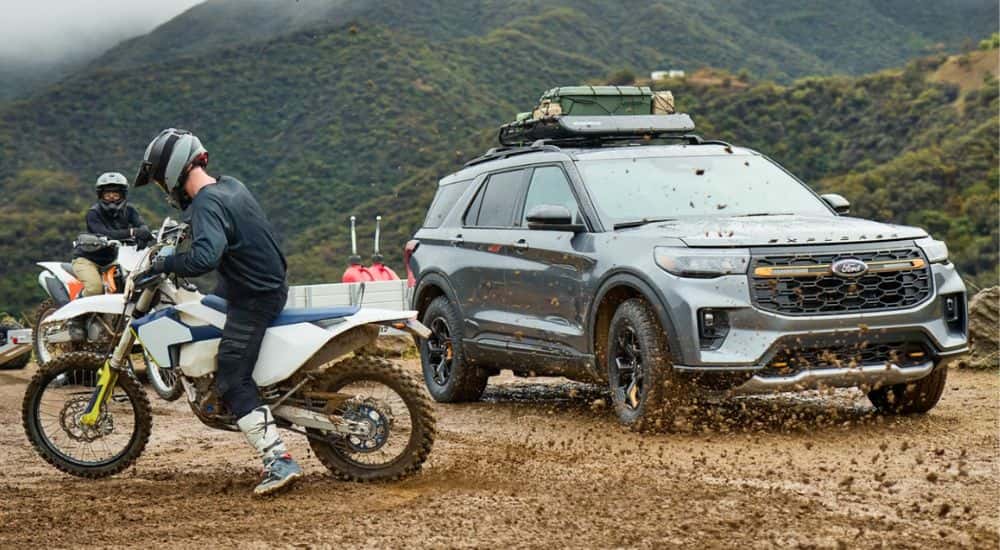
There was a time when the Ford Explorer represented a fairly straightforward idea: a family SUV large enough for road trips, practical enough for daily life, and rugged enough to feel slightly more adventurous than a minivan. That formula still exists in the 2026 Ford Explorer, but it has clearly expanded far beyond its original identity.
The modern Explorer lineup feels less like one SUV and more like several interpretations of what a three-row vehicle can be. One trim leans heavily into everyday family practicality. Another chases sportier styling. One is built around actual performance. There’s now even a Tremor trim aimed at drivers who want something with a more off-road-oriented personality.
That shift says a lot about where the SUV market sits in 2026. Midsize SUVs are no longer competing solely on passenger space and cargo volume. Buyers now expect vehicles to have more personality. They want something that reflects their lifestyle and aesthetic, even if the SUV is primarily used for everyday tasks such as school drop-offs, commuting, and running errands.
The 2026 Ford Explorer feels like Ford is leaning into this reality more aggressively than some of its competitors. Instead of building one broadly appealing SUV and stopping there, Ford essentially split the Explorer into multiple identities sharing the same foundation. That’s what we’re here to discuss today, so let’s get started!
The Explorer Still Starts With Everyday Family Practicality
Underneath all the trim diversification and lifestyle branding, the Explorer still succeeds because the core formula works.
Spacious, Versatile Design
Three-row seating remains one of the biggest reasons people continue to shop in this segment. Families need flexibility—passenger counts change constantly. One day, the third row stays folded flat for cargo space, while the next it’s suddenly carrying extra passengers across town. The Explorer continues handling that kind of unpredictability naturally.
What helps the Explorer stand out is that it never feels overwhelmingly large despite its practicality. That balance matters because full-size SUVs can become exhausting during normal driving. Parking lots feel tighter, visibility changes, and maneuverability ultimately suffer. The Explorer avoids much of that bulk while still offering enough interior room for road trips, sports equipment, luggage, groceries, camping gear, and day-to-day family life.
Confident Performance and Capability
Towing capability also continues to separate the Explorer from many crossover-focused competitors. It can tow up to 5,000 lbs when properly equipped, giving the Explorer the flexibility to tow trailers, boats, and other recreational loads. That matters to buyers who still want some truck-like usefulness without committing to an actual pickup, and it is largely due to what lies underneath the hood.
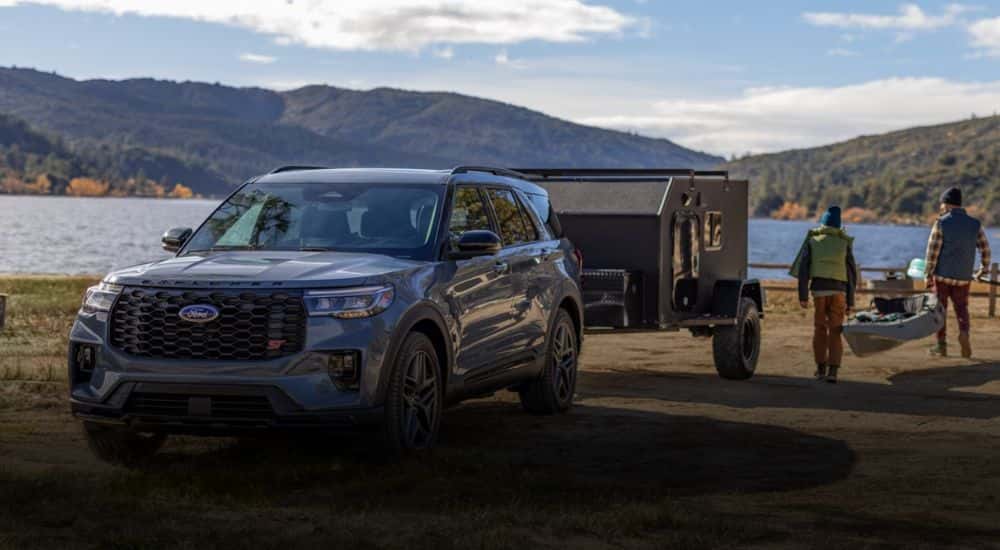
The first of the two engines is a 2.3L turbocharged I–4 that comes with the Active 100A, Active, and ST-Line trims and outputs up to 300 hp and 310 lb-ft of torque. The second is a 3.0L turbocharged V6 found in the ST, Platinum, and Tremor trims, which increases these numbers to 385 hp and 415 lb-ft of torque—a 24.6% and roughly 28.9% increase, respectively. Both engines are paired with a 10-speed automatic transmission for smooth acceleration.
Of course, family-oriented practicality isn’t possible without ample fuel efficiency. Fortunately, the 2026 Explorer has got you covered, regardless of whether it’s equipped with rear-wheel drive (RWD) or all-wheel drive (AWD). Here are the EPA-estimated ratings for every configuration:
(City/Highway/Combined)
- 2.3L turbocharged I-4 | RWD: 20/29/24 MPG | AWD: 20/27/23 MPG
- 3.0L turbocharged V6 | RWD: 18/25/21 MPG| AWD: 18/25/20 MPG
A Proven Driving Experience
The driving experience itself has played a major role in the Explorer’s longevity. Many midsize SUVs prioritize isolation above all else, becoming soft and disconnected in the process. The Explorer still feels relatively composed and planted on the road, which helps prevent it from feeling anonymous behind the wheel.
That’s probably the biggest reason the Explorer has survived so many shifts in the SUV market over the years. The vehicle adapts without completely abandoning what made it popular in the first place.
A Trim for Every Personality
The most interesting thing about the 2026 Explorer lineup isn’t necessarily any individual trim. It’s the fact that Ford seems fully aware that these vehicles now appeal to completely different lifestyles, and that their appeal lies in the sum of their parts.
The Active Trim: Everyday Practicality
Take the Active trim, for example. This feels like the modern default version of the Explorer. This is the broad mainstream entry point—the trim most likely to satisfy the average midsize SUV buyer without overcomplicating the experience. It focuses on the things most owners actually use daily: passenger space, comfort, cargo flexibility, technology, and approachable drivability.
The Active trim brings to the table the conveniences that modern families will be glad to have in their SUV, such as:
- Heated front-row seats
- 10-way power driver’s seat
- Power liftgate
- A crisp, clear 13.2-inch touchscreen
Power still matters, though. If you recall the performance produced by the 2.3L EcoBoost turbocharged engine, power is what keeps the Explorer from feeling sluggish despite its size. That amount of power would have sounded absurd for a family SUV not that long ago, but it’s now almost expected in this segment.
The ST-Line: Bold Style Without the Performance Focus
The ST-Line takes a completely different approach. It exists for buyers who want the Explorer to look more aggressive without necessarily upgrading to the ST trim level. Blacked-out exterior accents, hood badging, sportier design details, and 20-inch ebony-painted, machined-aluminum wheels create a clear, performance-inspired look, even though the driving experience remains more comfort-focused.
This trim says a lot about the current SUV market, too. Appearance has become nearly as important as capability, because why not? Buyers increasingly want vehicles that project a certain personality, even when their real-world usage remains fairly conventional.
The Tremor: Built for Adventure
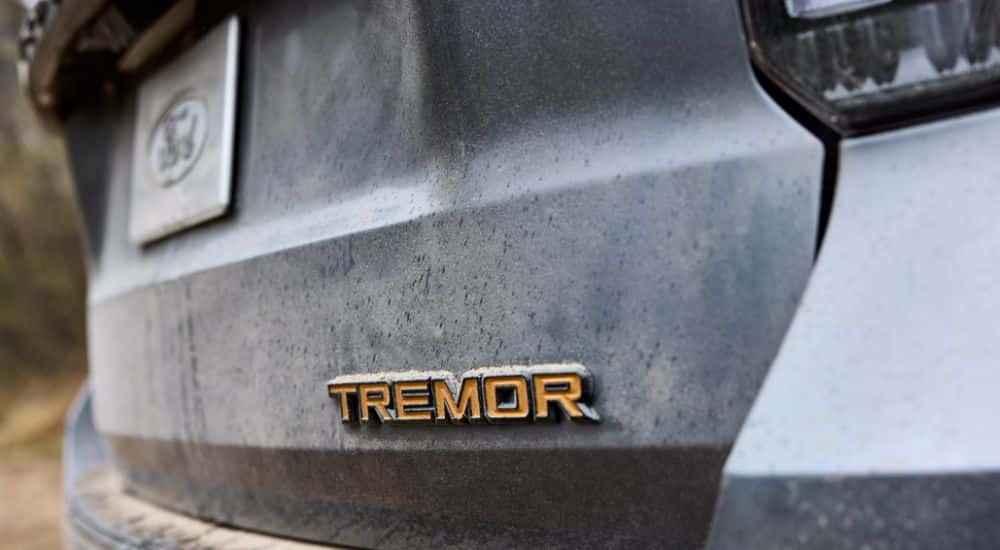
The addition of the Tremor trim is one of the best parts of the 2026 Explorer. It may actually be the clearest indicator of where Ford thinks SUVs are heading next. Adventure-oriented branding has become incredibly powerful across the industry, and Ford clearly sees an opportunity to push the Explorer slightly closer toward that space.
The Tremor introduces off-road-focused hardware, increased ground clearance, and a more rugged visual identity. But the list of features doesn’t stop there:
- Accent-color tow hooks
- Off-road auxiliary lights
- Front and rear deflector plates
- Torsen limited-slip rear axle
Most Tremor owners probably won’t spend every weekend crawling over trails, but that’s almost besides the point. Modern off-road trims are often just as much about lifestyle signaling as actual capability.
People increasingly want SUVs that suggest freedom, flexibility, and adventure, even if most driving still happens on pavement.
The ST: Performance at the Top of the Lineup
The Explorer ST sits at the opposite end of the lineup entirely. Powered by the aforementioned 3.0L turbocharged V6 engine, the ST exists for buyers who prioritize speed and dynamic handling from a three-row SUV. With sport-tuned suspension, performance brakes with red-painted brake calipers, quad-tipped exhaust, and red accent interior stitching, the ST distinguishes itself as the most performance-oriented Explorer in the trim lineup.
Tech-Forward Driving Experiences
Today’s SUV competition extends well beyond performance and capability—it increasingly takes place inside the cabin.
A Modern, Connected Cabin
Horsepower still matters. Towing, cargo room, passenger space—it matters. But for many buyers, the digital experience now shapes daily ownership just as much as mechanical capability.
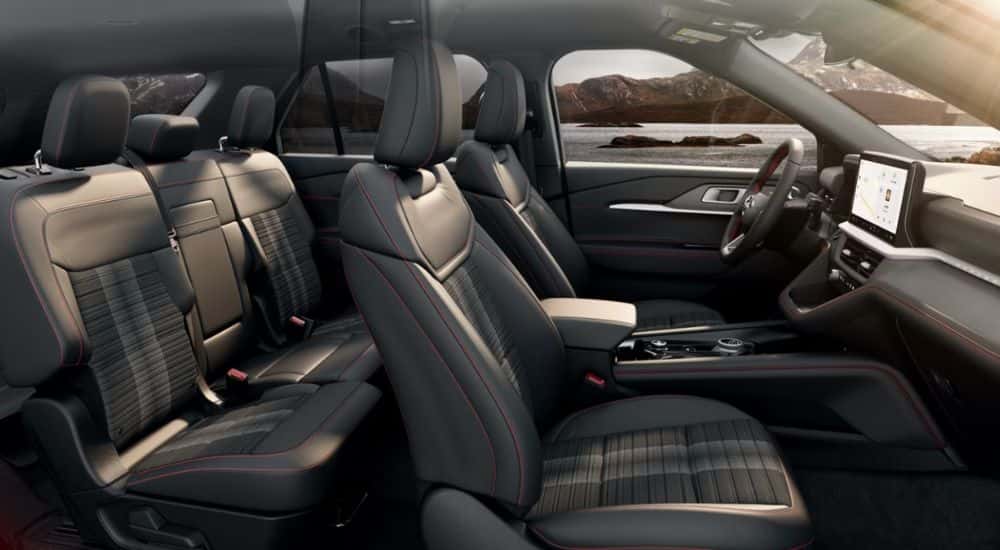
The 2026 Explorer reflects that shift heavily. A large 13.2-inch touchscreen, which we first saw in last year’s model, returns to dominate the dashboard, helping the cabin feel much more modern than older generations of the SUV. Ford’s Digital Experience software pushes the Explorer further into the same tech-focused territory that now defines much of the industry.
Wireless Apple CarPlay and Android Auto integration have also become less of a luxury feature and more of a baseline expectation. Drivers now assume their phones will seamlessly integrate with the vehicle experience. Any SUV failing to meet that expectation immediately feels outdated. Rest assured, you’ll find both features in the 2026 Explorer.
Advanced Driver Assistance
Driver-assist technology has evolved similarly. Features like adaptive cruise control, lane centering, and many of the technologies included in the Ford Co-Pilot360 Assist+ suite have become highly valued parts of the everyday driving experience. These systems help make commuting more comfortable and less demanding, giving drivers added confidence and convenience on everything from daily errands to long highway trips.
Technology That Enhances Everyday Driving
Long stretches of highway driving, dense traffic, and extended road trips all push buyers toward SUVs that reduce fatigue wherever possible. That creates an interesting tension in the modern market. SUVs still need to feel practical and durable, but they also increasingly function as rolling technology platforms.
The Explorer meets that challenge by blending everyday capability with intuitive technology that enhances comfort, convenience, and confidence behind the wheel.
A Midsize SUV for Every Type of Driver
Now we ask the big question: Who is the 2026 Explorer actually for? The traditional family buyer still exists, of course. The Explorer remains extremely good at handling carpools, road trips, luggage, groceries, sports equipment, and the thousand unpredictable responsibilities that come with family transportation.
But the lineup now extends well beyond that audience.
The commuter who wants extra space, a maximum of 85.8 cu.ft. to be exact, without driving a full-size SUV, still has a place here. The ST-Line targets buyers who care about styling and presence. The Tremor reaches toward outdoors-oriented branding and adventure culture. The ST exists for drivers who genuinely miss performance sedans but still need three rows.
There’s even a growing category of buyers downsizing from trucks. Some drivers no longer need an open bed every day, but they still want towing capability, higher seating positions, and a vehicle that feels substantial on the road. The Explorer fills that gap surprisingly well.
That broad audience reach is probably the vehicle’s greatest strength in 2026.
Ford isn’t asking one type of buyer to compromise anymore. The lineup now bends itself around entirely different ownership identities instead.
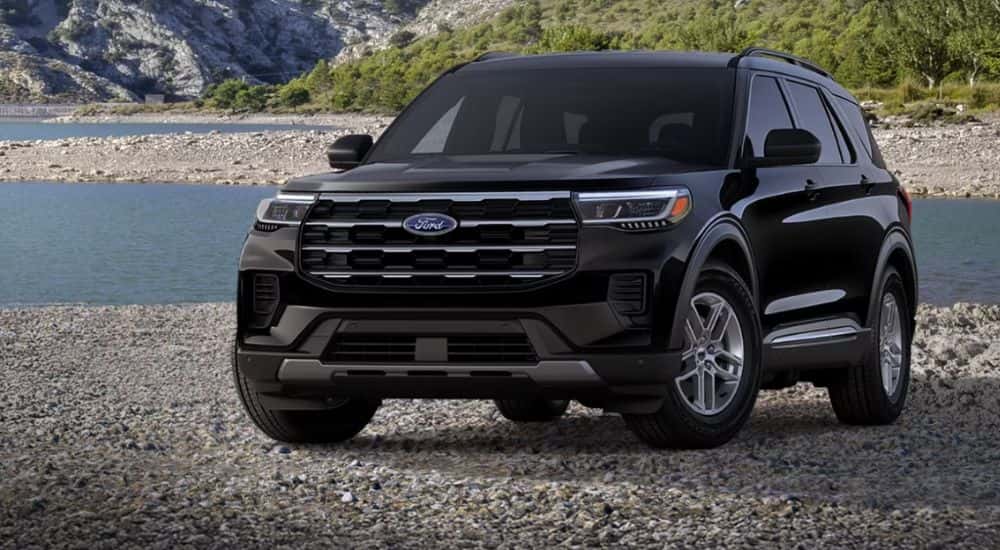
The Evolution of the Explorer
The 2026 Ford Explorer still succeeds as a family SUV. That part hasn’t changed.
What has changed is Ford’s willingness to let the vehicle become more specialized by trim. The lineup now spans several distinct interpretations of SUV ownership: practical family transportation, sporty styling, premium comfort, off-road identity, and performance driving.
That expansion feels intentional. Ford clearly understands modern SUV buyers no longer all want the same thing, even when they’re shopping within the same segment.
The result is a lineup that feels broader, more personality-driven, and far less generic than previous generations. In a market filled with midsize SUVs desperately trying to make a splash, the 2026 Explorer stands out by balancing multiple trim identities without compromising its core strengths.
0 comment(s) so far on Why the 2026 Ford Explorer Lineup Feels More Specialized Than Ever