
Your Guide to Tire Rotations and Alignment
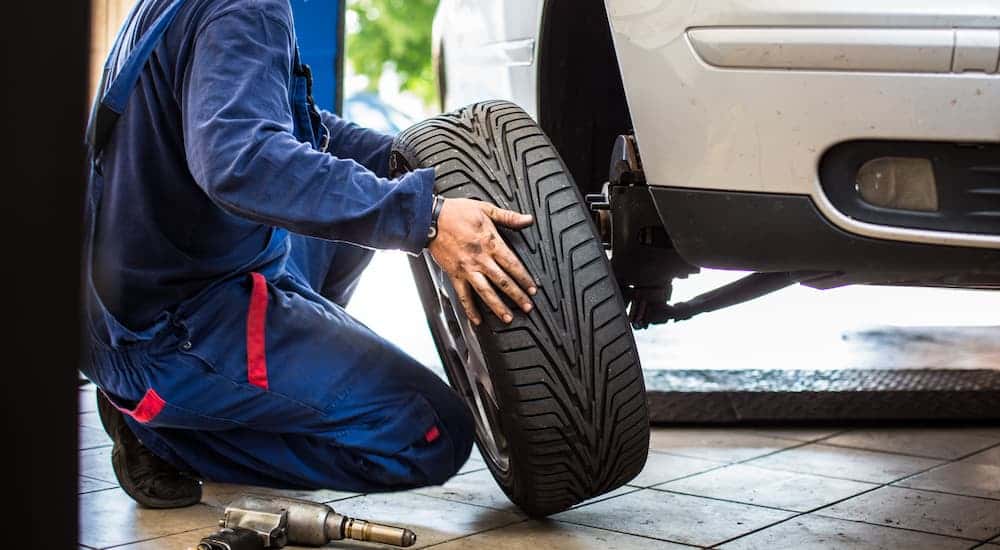
It’s truly impossible to overstate the importance of the tires and their overall condition on your vehicle. You’ve likely heard folks talk about how your tires are the only point of contact between your car and the road (at least we hope it is), which might seem like a cliché point to make, but it’s a vital one. Everything you do when driving goes through your tires, so you rely on them to help you remain in control at all times. That’s why it’s important to choose the right tire shop near Stone Mountain when it is time for a tire rotation or to have your wheel alignment adjusted. But how do you know when that time comes? Don’t worry; we’re here to help you know what to look for, and we can assist you with everything your tires need.
What’s a Tire Rotation?
Even though the rubber in your tires has been designed and engineered to be durable and last a long time, inevitably, they’ll wear out and need to be replaced. As you drive around Stone Mountain, you put wear and tear on your tires, simply going down the road, making turns, and coming to a stop. A tire rotation moves where your tires are located on your vehicle to help even out that wear rather than having it all occur in the same spot for years at a time. This typically involves shifting the front tires to the back and the back tires to the front; it can also mean swapping one from left to right and vice-versa, depending on your vehicle. This evens out the wear on your tires so they last longer before you need to replace them.

Signs You Need a Tire Rotation
Trying to rotate your own tires can be a challenge since you need to lift your vehicle up securely, which is why we’re happy to do it for you. Properly rotating your tires gets more life from them, so you spend less on replacing them, which makes things simpler for you. It can also help maintain great performance and gas mileage for your vehicle. Some signs to keep in mind that indicate you need a tire rotation include:
- Time or Mileage Points––One of the simplest ways to know if it’s time for a tire rotation is how long it’s been since your last one. Having your tires rotated about every 5,000 miles or so is a good general rule, though you should check your vehicle’s owner’s manual to see how often the manufacturer recommends it.
- Uneven Wear on Your Tires––It’s a good idea to routinely give your tires a visual inspection to see if they look underinflated and to check for any damage to them. If you notice excess wear in certain spots, then it could mean it’s time for a tire rotation.
- Issues with Handling––As we said, all of your control over your vehicle goes through your tires. Any problems with handling—including steering, braking, and poor traction—can indicate that you need to rotate your tires (or maybe even replace them).
- Vibrations While Driving––If you feel vibrations throughout your vehicle, it can be a warning sign of numerous issues, including that you need to rotate your tires. Uneven or excess wear can lead to poor road contact, which results in vibrations as you drive, especially at higher speeds.
Remember that keeping your tires in great shape helps keep you in control of your vehicle while you drive around Stone Mountain each day, which is why things like tire rotations are so important. We can rotate your tires for you while taking care of other services like changing your oil and checking your brakes, making things simpler and more convenient for you.
What’s Your Wheel Alignment?
Sometimes called “tire alignment,” wheel alignment refers to how your wheels (and the tires on them) are positioned on your vehicle. There are three different types of alignment for your wheels, and each of them is important. If you look at your vehicle from the front, then how your wheels angle at the top is referred to as camber—negative camber if the top angles toward your vehicle or positive if it angles away. Picturing your vehicle from the top down, how the front of your wheels angle is called toe—toe in if they point in toward your engine at the front or toe out if they point outward. Finally, if you look at your car from the side, then your wheels have a natural centerline that would run straight up and down perpendicular to the ground called caster; negative caster means the centerline is angled forward, while positive caster means it is angled back toward the rear of your vehicle.
Signs You Need an Alignment Adjustment
When we check your vehicle’s alignment, we run tests to see all three of these angles and how they’re positioned. Based on what you drive, your car’s manufacturer provides proper settings for camber, toe, and caster; note that these aren’t necessarily meant to be zero degrees. We can test your alignment to check how it looks and then make adjustments to ensure all three angles are set properly. If you’re not sure whether you need an alignment adjustment, then keep these warning signs in mind as you drive around Stone Mountain:
- Vehicle Pulling to One Side––One of the most common signs of poor alignment is that your vehicle seems to pull to one side while you drive. You can check for this by finding a straight road with no other traffic around, and then drive at a moderate speed and lightly let go of your wheel; if you veer to one side, then your alignment could be out of sorts. You may also be able to feel your vehicle pulling to one side or resisting you as you drive normally.
- Turned Steering Wheel to Drive Straight––Similarly, if you notice that you have to adjust or compensate for not driving straight, then your alignment is likely off. Simply drive straight down a road and look at your steering wheel; if you have to hold it crooked to drive straight, then something’s probably wrong with your alignment.
- Uneven Wear on Your Tires––We mentioned this for tire rotation but it’s also a potential sign of wheel alignment issues. If your alignment is off, then your tires might not sit flush and that can lead to uneven wearing on them, so keep this in mind when checking your tires regularly.
- Shaking or Vibration in Steering Wheel––If you notice vibrations or shaking as you drive that mostly come through the steering wheel, then you might have an alignment issue. Your steering system connects directly to your wheels and tires on the road, so a problem there can often be felt through your steering wheel as you drive.
Trying to adjust your own alignment is incredibly difficult and typically recommended only for people who have a high skill level when working on their own vehicles. It can also require specialized equipment to test alignment and the adjustments need to be made properly to all three angles. Mistakes when adjusting alignment can be dangerous and even result in catastrophic collisions while driving. That’s why you should let our experts handle everything for you.

Here for Your Tires Near Stone Mountain
Taking care of your tires doesn’t have to be something you dread, especially when you have folks ready to work hard for you and make sure you’re safe on the road. It’s always a good idea to check on your tires and be aware of how your vehicle handles and rides, but we’re more than happy to help with anything you need. That includes checking your tires and other parts of your vehicle on a routine basis to see how everything looks. The last thing you ever want is to come out to your car in the morning and find a flat tire or to have a tire blowout while you’re on the highway. We’re here to make sure your vehicle and all of its components, including your tires and more, are in the best shape possible. No matter what you need, you can count on our team at Loganville Ford to assist you and have you back on the road right away.
0 comment(s) so far on Your Guide to Tire Rotations and Alignment