Your Guide to Proper Transmission Service
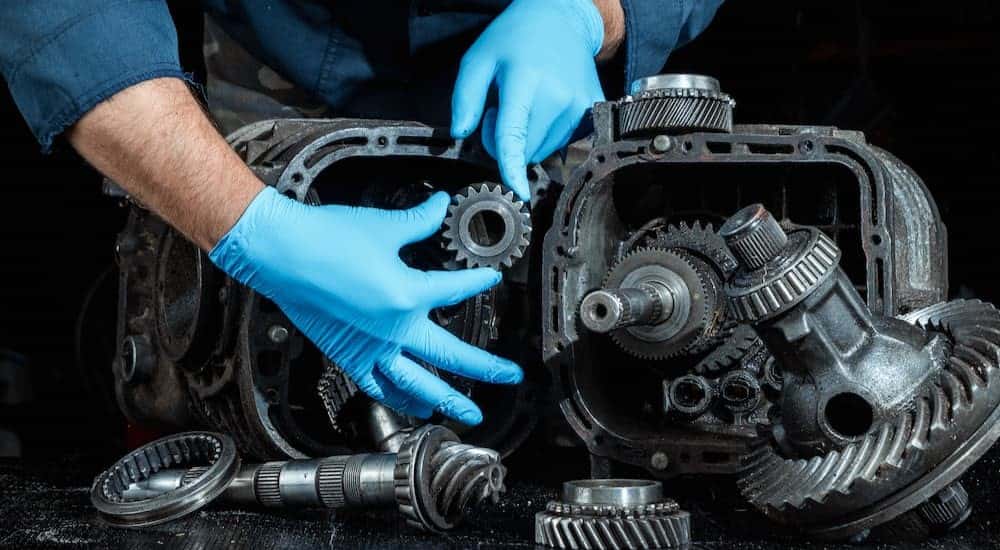
The importance of your vehicle’s transmission can’t be overstated. Although the engine of your car, truck, or SUV is what generates power for your vehicle, the transmission helps send that power from the engine to the wheels so you can actually go somewhere. Not only that, but it adjusts how much power is sent to the wheels based on your speed as you drive, ensuring optimal performance and fuel efficiency. Over time, your transmission needs service and maintenance like any other part of your vehicle. If you’re looking for transmission repair near Snellville, Loganville Ford can help you with everything you need. Let’s look at what you should know about transmission issue warning signs, proper maintenance, and what to expect when your transmission needs some work.
Warning Signs of Transmission Problems
Although there is a lot to know about proper car care and maintenance, including your vehicle’s transmission, understanding warning signs to look for is vital. Some of these signs can be a bit subtle, though they are often quite clear and hard to miss. Still, when you are unsure what the problem might be, it helps to understand what may indicate a potential transmission issue. Common signs include:
- Warning Light: Arguably, the clearest and most direct sign to look for is a warning light, either for the transmission itself or a more generic check engine light. You will typically see this on the driver display or instrument cluster. It can take different forms depending on your make and model. This is your vehicle letting you know there is a problem, so it is important that you never ignore it.
- Slow Transmission Response: If you are familiar with how your automatic transmission feels when it shifts gears, this is a warning sign you can easily notice. Watch for your vehicle not switching gears as quickly or frequently as you’re used to, or not shifting gears when it should, as you drive around Snellville.
- Slipping Gears: Similar to a slow response from your transmission, it’s important to understand how regular driving feels to detect when something is off. Your vehicle’s transmission should switch gears properly and stay in the correct gear. If you feel the gears slip or the engine revving without the vehicle accelerating, you likely have an issue with your transmission that will only worsen.
- Shaking or Vibrations: You can feel some issues as you drive, such as shaking or vibrations in your vehicle. Shaking coming through your steering wheel often means an issue with your steering system, while a shaking brake pedal is a warning about wearing brakes. If your vehicle shakes or vibrates excessively when shifting gears, you might have a transmission issue that must be fixed.
- Grinding Sounds: A grinding sound when your transmission switches gears is one of the most common and obvious indicators that something has gone wrong. Anyone who’s learned to drive a manual transmission knows exactly what this sounds like, and you don’t want to hear it from your vehicle’s automatic transmission.
- Burning Smell: Although different problems can create a burning smell from your vehicle, none of them are good. This usually means some kind of fluid is leaking onto a hot surface, or that parts are overheating and potentially damaging each other. Early detection of a fluid leak due to burning smells can be easy to fix and help you avoid much bigger problems.
- Visible Fluid Leak: Finally, it’s always a good idea to check the area under your vehicle after parking somewhere for a while. Look for any liquids or stains that weren’t there when you first parked. Transmission fluid is typically red in color, so keep an eye out for that to detect a leak or similar problem before it grows into a disaster.
All of these warning signs are noteworthy because they give you a chance to act before a problem becomes worse. Smaller vehicle issues can almost always become a bigger headache that you want to avoid. Noticing a burning smell that lets you catch a transmission fluid leak early on helps prevent parts inside the transmission from damaging each other due to a lack of lubrication, which can require a full transmission rebuild or replacement. That’s a much more expensive fix and takes longer, so act quickly any time you notice a warning sign like the ones we looked at.
How Often Do You Need Transmission Service?
Assuming you don’t notice any of these potential warning signs, your vehicle’s transmission should run fine with minimal service and maintenance for a long time. The simplest type of service that you should have taken care of for your transmission is a routine inspection. In general, we suggest a multi-point vehicle inspection for your car, truck, or SUV every time you get your oil changed. This includes a wide range of components, including your battery, drive belts or chains, exhaust system, radiator and cooler, and your transmission. Routine inspections can help catch leaks or other issues before warning signs appear.
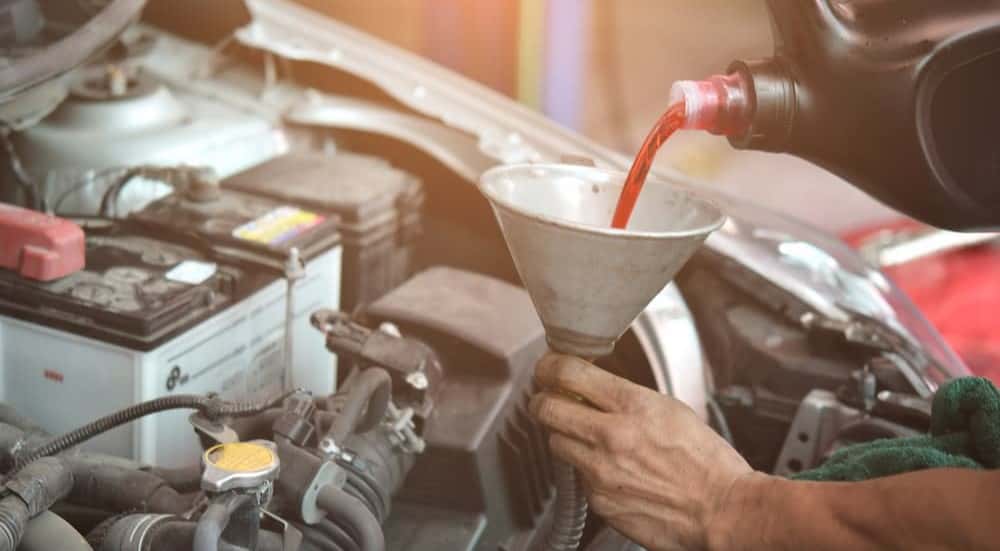
As long as everything works properly, you’ll want to have the fluid in your vehicle’s transmission drained and replaced based on the manufacturer’s recommendations. Some shops recommend replacing your transmission fluid about every 60,000 to 100,000 miles, but that can be more often than you might need. Looking at something like the 2025 F-150, for example, Ford recommends replacing the automatic transmission fluid and filter every 150,000 miles. There’s no reason to spend money on a service that you don’t need, so it pays to look at the manual for your vehicle and see what its manufacturer recommends.
What Do Transmission Service and Repairs Involve?
The most common type of service your vehicle’s transmission needs is having its fluid replaced. The transmission fluid works much like your engine’s oil, keeping parts moving smoothly without excess heat buildup or other issues. As long as things function properly, this fluid runs through a closed system, and it takes a long time for dirt or other things to build up, so it shouldn’t need to be replaced very often. A filter helps keep this fluid clean and should be replaced along with the transmission fluid. Repairs often involve the fluid’s hoses and lines. Any damage, leak, or similar issues must be addressed quickly since they can lead to bigger problems.
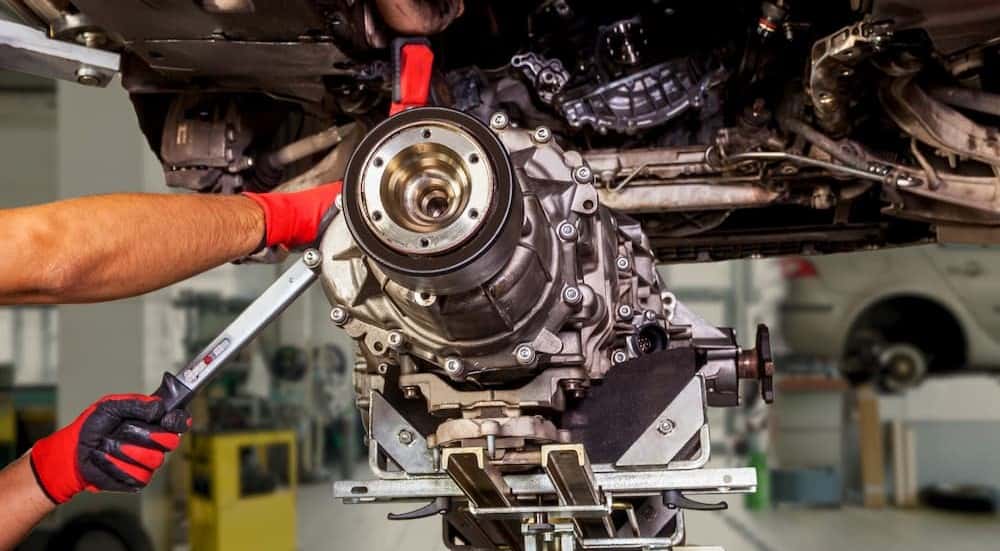
If a leak is left unfixed, bigger problems will likely complicate things. Without proper lubrication, your transmission can damage itself, and parts or the entire transmission may need to be replaced. Your vehicle also likely has sensors and electrical systems involved with your transmission. A malfunction with those can cause performance issues, and replacing the sensor or other component is a relatively simple fix. The best way to be sure what issue you’re dealing with and address it properly is with a diagnostic by trained technicians.
Here to Help Snellville Drivers
No matter what vehicle you drive, Loganville Ford can help with your transmission and make sure you’re in good shape. Vehicle problems can be scary and are definitely a hassle, which is why it’s so important that you have people you can count on in your corner to figure things out and get you back on the road quickly. Whether it’s simply time to replace your transmission fluid or you’ve started hearing some strange sounds that have you worried, you can depend on us to take care of everything you need. That way, you can focus on the things that matter most to you and get back to enjoying what your vehicle has to offer.
0 comment(s) so far on Your Guide to Proper Transmission Service
A clear and informative guide—understanding proper care helps keep your transmission performing at its best.
A helpful guide that highlights how consistent transmission maintenance improves reliability and extends vehicle lifespan.