
Swapping Treads: What Type of Tires Do You Need?
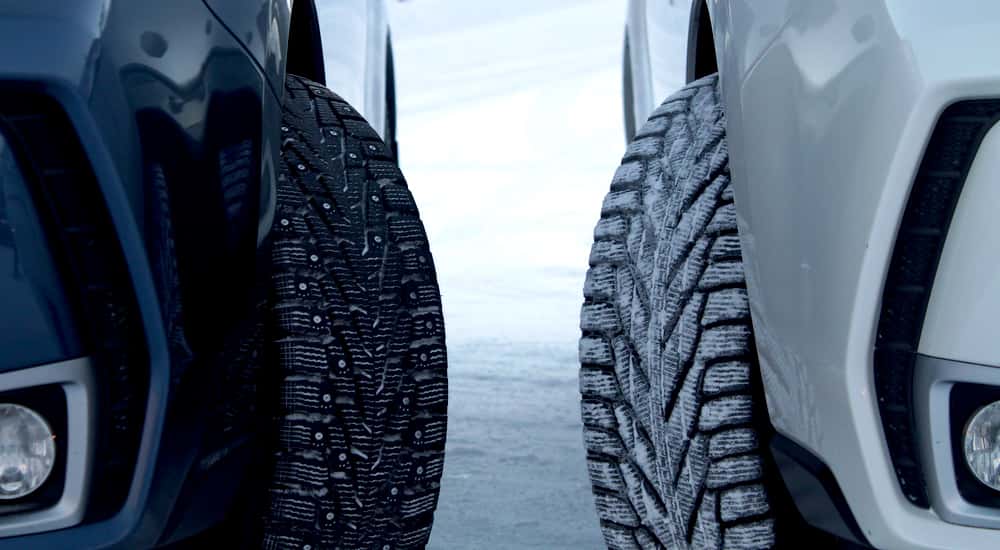
The type of tires installed and their condition can significantly affect your vehicle’s performance. From an agile coupe to a heavy-duty truck, the tires matter, but not just when they’re first installed or replaced. The general wear of those tires, over time, also plays a role, including how unevenly they deteriorate; that is precisely why tire rotations are so important.
Lose too much tread and you can lose control on the open road, giving up much-needed traction, especially when it’s wet or there’s inclement weather. Keeping up on those tires is just as important, too, and not just rotations and swaps, but managing the proper tire pressure. That’s why it’s always good to have a lead on a good tire shop in Loganville.
Selecting the right tires for your vehicle is not simply a cosmetic concern, but also one that has a lot to do with safety, driving enjoyment, and general performance. While most dealerships, repair shops, and tire shops have your best interests at heart, it’s still good to understand the differences between tire types and to know beforehand which types of tires are going to work best for your vehicle and your situation. When you’ve figured that out after reading this guide, or you still have questions, you can chat with our service center at Loganville Ford.
How Do I Know It’s Time to Replace the Tires?
All tires wear at different intervals, and depending on the types of tires in question, the parameters for replacement may be slightly different. But all rely on tread depth.
The thicker the tread on the tire, the longer it has until it needs to be replaced, barring an accident or a flat. All-season tires, for example, typically have tread depths between 10/32 and 11/32 of an inch. When it gets down to more than half, 5/32 to 4/32 on an inch, you should seriously consider replacing the tire(s).
The best way to test tire tread is to use the quarter method. Take a quarter, with the head side facing down, upside down, and wedge it into a tread groove in the tire. The space between the top of George Washington’s head and the very edge is about 4/32 of an inch, exactly the depth you’d need to replace the tires.
When placing the quarter in the groove, if you can see the top of Washington’s head, or the text at the top, it’s time to replace it. A penny also works, with the very top of Lincoln’s forehead serving as the starting point.
How Many Tires Do I Replace?
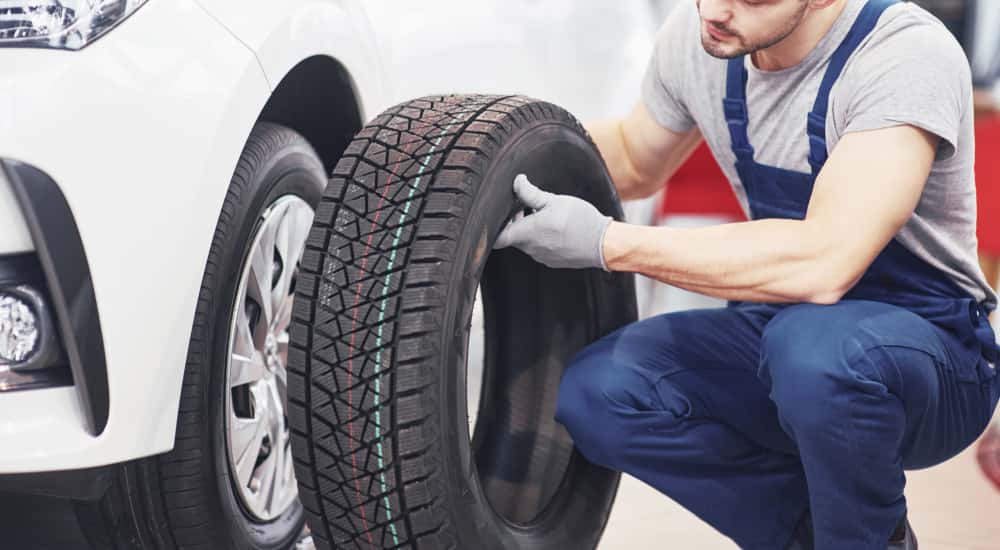
As a general rule, it’s important to keep the wear across all four tires as even as possible, hence tire rotations. Of course, in the real world, that’s not always achievable. But it is best to replace multiple tires when upgrading, unless there’s significant damage to a single tire.
For instance, if a tire has been damaged by an accident or road hazard, and the rest are fine, you would replace only the damaged tire. However, the new tire must be the exact same as the others—the same brand, line, size, and speed ratings. Going with a less expensive or budget tire that’s different is not a good idea. It could wear differently, creating a disparity between the rest of the tires, and that has a direct impact on performance.
As for whether or not you should replace all of your tires, it depends on the longevity of the treads. If all of your tires are wearing out together, evenly, then you should probably swap them all out. If only a couple of your tires are worn, it’s best to swap them with the same exact tires, with the new tires on the rear axle or in the rear positions and the old tires at the front.
By putting them at the back of the car or vehicle, you are ensuring it has the best possible grip or traction during your drives. That keeps the vehicle balanced and easy to control even under poor conditions.
What Type of Tires Do You Need?
There are several different types of tires to consider, including summer, winter, and all-season. Not to mention, tires come in a range of sizes, and sometimes vehicles can accommodate several of them. How do you know which tires to choose, both in terms of the type and the size?
Step one is to determine the right size tires for your vehicle. Typically, you can find this information in the user manual for your make and model, or by simply doing a web search—the best reference is always your vehicle’s manufacturer. But in most cases, the existing tires will list the size and make of the tire on the side, etched into the rubber, serving as an excellent reference for your new upgrade.
Tire shop professionals will know what you should be using, but if you are going to change, try to stick within a 3% diameter range change for cars and vans, 15% range change for SUVs and some trucks. You shouldn’t go more than that percentage larger or smaller for your tires.
Next, consider the absolute worst conditions that exist when you drive. Is it always sunny, sometimes wet? Is there lots and lots of rain or snow? Do you drive off-road and over treacherous terrain? Is it mostly highway driving? Typically, this information will tell you what kind of tires you need: summer in the summer, winter in the winter, and for snow, all-season for a versatile option with traction for most inclement weather conditions.
Moreover, if those bad conditions are uncommonly encountered, such as places where it only rains or snows for a couple of months out of the year, then one set of tires will be fine. If those conditions happen regularly, you might want to get an extra set of tires to match the changing seasons where you live. Winter for tough winter months with lots of snow, and all-season for the rest of the year, for example. However, for most people, a single set of tires is suitable.
How to Assess Tire Value?
How do you compare the price and value of varying tires? Some might be much more expensive, despite being a perfect match. Should you go with the budget option or not? This is a question that, unfortunately, no one can really answer for you. The decision is always going to be yours, and while tire shop professionals will offer guidance, the final piece of that puzzle is what you ultimately select.
The best way to assess the value of a potential set of tires is to weigh the cost per mile of each tire. Budget-friendly tires are often in the range of $0.005 to $0.015 per mile, versus mid-range at $0.01 to $0.03 per mile and high-performance at $0.02 to $0.05 per mile. When you’re looking at upwards of $500 to replace all four tires, it can seem like a lot. However, if you break down the cost per mile, it may be better to go with the mid-range or high-performance options as they often last longer and offer better traction, fuel efficiency, and performance.
In the end, the decision is always going to be yours, but it helps to have a much better understanding when going through the motions. Most importantly, it helps to have proper guidance from seasoned experts, which is just what you’ll find when you visit our team at Loganville Ford.
0 comment(s) so far on Swapping Treads: What Type of Tires Do You Need?